Close your eyes and try to hear it. The exact timbre, the way they paused before a joke, your grandmother's lilt on a particular word. A face, you can recover from photographs. A voice fades in silence — and it is often what we most regret never having kept.
Why a voice is the first thing we forget
We photograph everything: birthdays, holidays, faces changing across the decades. But who thinks to record a voice? It is so familiar that we assume it is immortal — until the day we reach for it and find only an absence.
Visual memory clings to images; auditory memory has almost nothing to hold on to. Without a recording, a voice dissolves within a few years. We remember having heard it, but the sound itself — its pitch, its grain, its music — slips away. It is one of the quietest and deepest losses there is.
A voice, like a madeleine
Proust showed that a taste or a smell could bring back a whole world. A voice has exactly that power. A few seconds of recording, and an entire presence returns: the kitchen, the light of a Sunday afternoon, the way that person used to end their sentences with a small laugh.
A voice is not just a vehicle for words. It carries emotion, hesitation, humour, the tender authority of a parent. It says what text cannot write: the warmth of an evening, the weariness of a confidence shared, the quiet pride of someone finally telling their story. To preserve a voice is to preserve part of the very body of memory.
Preserving the written story — and the voice that carries it
At Collect Memories, the heart of our craft remains the book: turning a life into a written, structured and lasting narrative. But that narrative is born of speech. And that speech, we record.
Every interview session is captured on a dedicated recorder. At first, these files serve a practical purpose: making it possible to transcribe each conversation faithfully, losing none of the anecdotes or nuances. But these recordings have a second, far more precious life. They hold the voice exactly as it was, on that day, in the family living room.
At your request, audio excerpts can be preserved and given to the family: a passage where the person recalls a first meeting, recounts a war they lived through, or passes on a piece of advice. The book keeps the words. The audio keeps the voice that spoke them.
The key idea: the book tells a life, but the recording lets you hear it. The two don't compete — they complete each other. One is read in silence, the other replayed aloud. Together, they restore an almost complete presence.
How the recording works
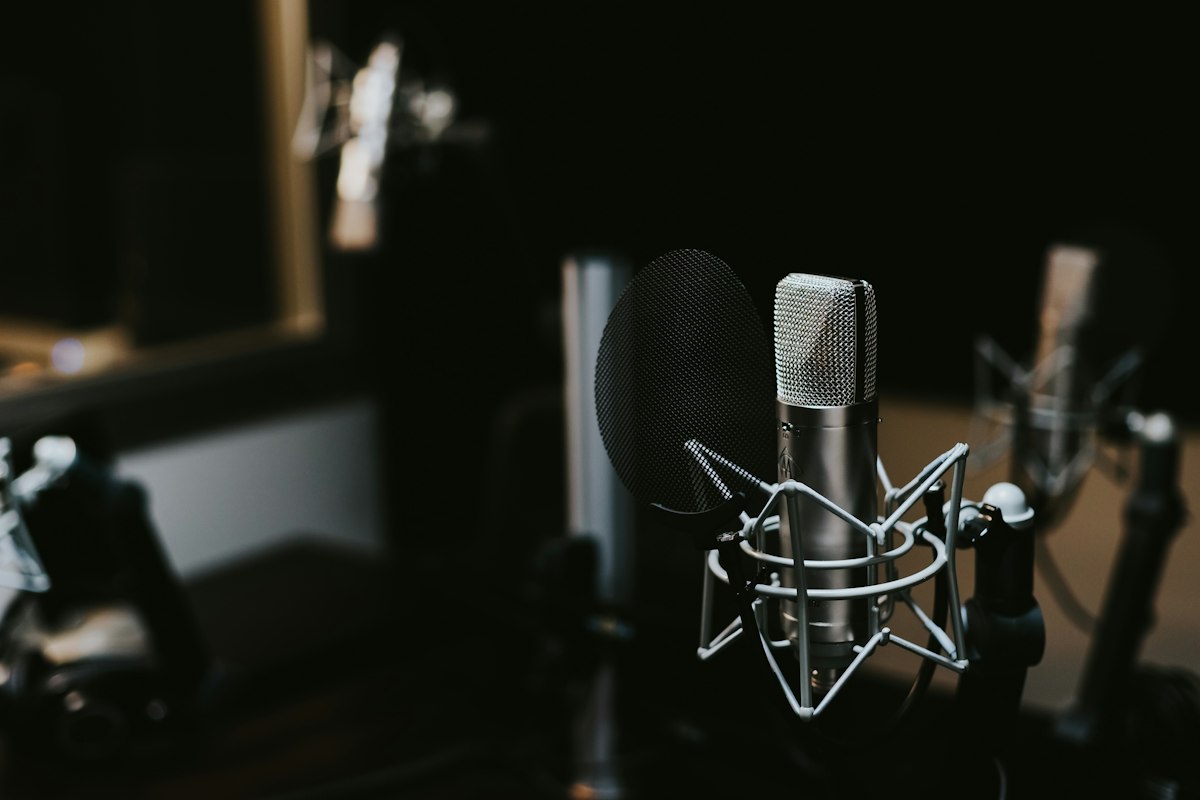
Nothing intimidating. Recording is done discreetly, during the interview sessions at home, where the person feels at ease. No studio, no overbearing equipment: a quality microphone, set down without ceremony, forgotten within a few minutes.
It is precisely this absence of staging that gives the result its value. We aren't after a "perfect" voice, articulated for a microphone. We're after the real one: the voice that hesitates, that is moved, that laughs at a memory. Faithfulness matters more than performance.
On the technical side, capture is done in high resolution, away from background noise. The biographer attends to the quality of the sound as much as to the quality of the listening: a good recording begins with genuine attention paid to the person.
Lasting over time: formats and longevity
A recording is only worth what it can keep. That is the whole challenge of formats. Cassettes demagnetise, CDs scratch, the files on a phone vanish at the next change of device. A sound memory deserves better than a fragile medium.
Our recordings are archived according to a few simple but essential principles:
- An open, durable format. Files are kept in standard, long-lived audio formats, readable on any device — today and tomorrow — without depending on proprietary software.
- Archival quality. Beyond a lightweight listening version, a high-quality master is preserved, to withstand time and future conversions.
- Redundancy. A single file is a file at risk. Several copies, on separate media, protect the memory against hardware failure.
- The accompanying transcript. Each audio excerpt can come with its written transcription: should the sound ever degrade, the words would remain.
This dual preservation — sound and text — is the best insurance against forgetting. A format may age; a transcript can always be read again.
When audio meets image: the video memory montage
For families who want to go further, the optional video memory montage gives the voice a visual setting. The most striking audio excerpts are paired with photographs of the person, family documents, and the places that mattered. The voice tells the story, the images unfold, and the memory takes shape in a way the page cannot.
This montage is not just another film: it is an object of transmission, to be shown on an evening of family reunion, to be given to grandchildren who may never have known that voice — or who would otherwise forget it.
How to start
The rule is always the same: the right moment is now. A voice gives no warning before it falls silent, and memories don't keep forever. The earlier you record, the richer what you keep will be.
It all begins with a free 45-minute discovery call. We assess together the story to be gathered, and how audio can accompany the book — simple preserved excerpts, or a full video memory montage. From there, we build a project tailored to you.
Conclusion
Preserving a voice is not a technical indulgence: it is saving what fades the fastest and is missed the most cruelly. The book fixes the words for generations; the recording fixes the voice that carried them.
One day, someone will want to hear that voice again. The real question is whether there will be anything left to listen to.
Preserve a Loved One's Voice
During a free discovery call, we assess your project and the place audio can hold within it, alongside the book. No obligation.
Book a Free Discovery Call